
The Air You Can’t See Still Matters
Walk into a home that looks spotless, and you might assume everything’s in top shape. But air quality is one of those hidden factors that can quietly impact comfort, health, and even the structure itself. From excess humidity to invisible pollutants, what’s floating around inside your home can tell a story—if you have the right tools to read it.
What Exactly Do Air Quality Sensors Do?
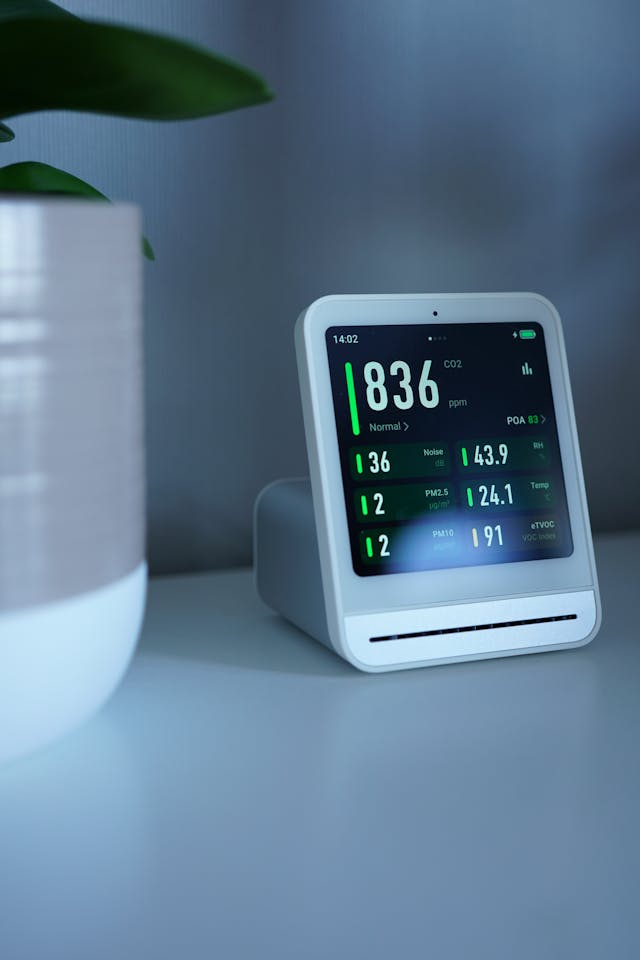
Air quality sensors are designed to measure things you typically can’t detect on your own—particulate matter, humidity, carbon dioxide, volatile organic compounds (VOCs), and more. Some models are simple and track just one or two elements, while others offer a full snapshot of your indoor environment in real time.
Think of them as an early warning system. Instead of waiting until there’s a musty smell or visible mold, a sensor can alert you when conditions are trending in the wrong direction.
Where They Really Shine
In certain situations, these devices can be especially valuable:
- High-humidity climates – Persistent moisture can lead to mold growth and wood damage. A sensor helps you stay ahead of it.
- Homes with poor ventilation – If airflow is limited, pollutants can build up quickly.
- Recent renovations or new furniture – Many materials release VOCs that linger longer than expected.
- Allergy or asthma concerns – Tracking airborne particles can help you pinpoint triggers.
In environments where conditions shift quickly, having real-time feedback can make all the difference.
Are They Worth the Investment?
The answer depends on what you’re trying to accomplish. If you’re looking for peace of mind and better control over your indoor environment, an air quality sensor can be a smart addition. They’re not overly expensive anymore, and many integrate with smart home systems for added convenience.
However, it’s important to be realistic about expectations. These devices don’t fix problems—they identify them. You’ll still need proper ventilation, filtration, or dehumidification to address any issues that come up.
Things to Watch Out For
Not all sensors are created equal. Lower-end models may lack accuracy or consistency, especially when measuring finer particles or VOCs. It’s worth doing a bit of research and choosing a device with solid reviews and reliable calibration.
Also, placement matters. A sensor tucked in a corner won’t give you the same readings as one placed in a central, well-used area of the home.
Final Thoughts: A Useful Tool, Not a Cure-All
Air quality sensors aren’t a necessity for every homeowner—but they can be a very useful tool if you want better insight into your living space. They help turn guesswork into data, and that’s always a step in the right direction.
At the end of the day, maintaining a healthy home comes down to awareness and action. A sensor can provide the awareness—the rest is up to you.
